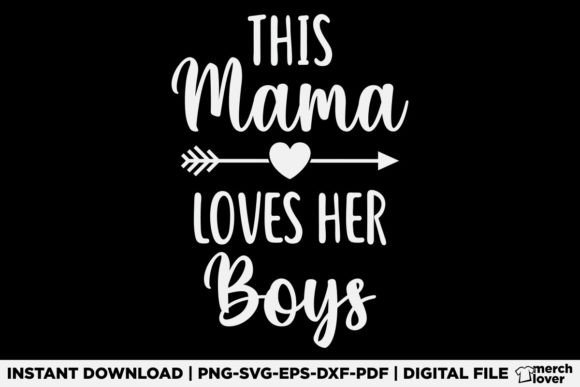
An Embroiderer's Review: Mama Loves Her Boys Design
As a designer who reviews embroidery files for practical use, I look at a design and immediately picture it stitched. I consider the mood it will create on fabric, the projects it naturally belongs to, and the pitfalls to avoid. When I opened the Mom This Mama Loves Her Boys T-Shirt design, my first thought was, “This is a heartfelt, everyday sentiment with straightforward charm.”
The Immediate Feel: Warm, Direct, and Uncomplicated
The layout has a friendly, handwritten quality. The phrase “Mom this mama loves her boys” sits as a central statement, not overly decorated. It feels personal, like a note penned on a lunchbox napkin. This isn’t a flashy, ornate piece; its strength is in its directness. For an embroidery project, this suggests a design that will stitch cleanly without a lot of tiny, fussy details that can get lost or cause thread breaks. The visual personality is warm and inclusive, clearly aimed at celebrating a mother’s love, but as the product description notes, it’s versatile enough for dads, grandparents, or friends to use as well.
I imagined it stitched on a simple cotton tote bag for a mom to carry—a practical, daily-use item that makes a quiet statement. The design wouldn’t overwhelm the bag’s functionality; it would complement it. This is the kind of graphics file that belongs on items meant for real life, not just display.
Where This Design Stitches Up Beautifully
In real-life embroidery situations, this design’s simplicity is its greatest asset. For custom apparel like t-shirts and sweatshirts, it works as a medium-sized chest or sleeve motif. On a baby clothes item, like a little knit hoodie, it becomes a sweet declaration from a parent, stitched small but still legible. I’ve seen similar sentiments work wonderfully as a small patch on a blanket or nursery decor pillow.
Thinking of small business merchandise, this is a solid choice for holiday gifts—Mother’s Day, obviously, but also as a personalized gift from a child to their mom. For Etsy sellers and craft fair products, it could be embroidered onto aprons, kitchen towels, or pillow covers to create a cohesive “family home” collection in a boutique. The theme is universally relatable, which aids buyer engagement. As a digital embroidery file, it provides a reliable design asset for craft business owners to use across multiple product types.
A Practical Scenario: The Embroidered Holiday Sweatshirt
Let’s walk through a typical use case. A client orders a custom holiday embroidery gift—a cozy sweatshirt for a mother with two sons. You hoop the garment, select a soft blue or gray thread for a modern look, and stitch the Mom This Mama Loves Her Boys T-Shirt design. The straightforward lettering means the satin stitch borders or fill stitch areas (depending on the file’s construction) will lay down smoothly on the fleece fabric. The finished product feels handmade but professional, enhancing customer trust in your work. The mother receives it, and the value isn’t in intricate detailing, but in the clear, wearable sentiment. It’s giftability in thread form.
Caution Areas: Where to Hoop with Care
While the design is adaptable, some applications require forethought. The lettering, depending on its exact size in the file, may have corners or small curves. On small hoop sizes—like for a cap or a child’s small tee—you must ensure the text remains crisp. If the design is dense, stitch density could be high; on thin fabric or stretchy fabric like a fine tee, you’ll need the right stabilizer to prevent puckering.
Dark fabric presents the classic thread contrast challenge. A white or bright thread will make the design pop, but you should always test the design on scrap fabric first to see how the thread colors interact with the background. Textured fabrics, like a woven towel, can obscure clean edges, so a slightly larger size might be better. And for items needing frequent washing, like baby items, ensure your stitch coverage is solid to withstand wear.
Always check whether the design works for both personal and commercial projects and confirm licensing before selling finished items. The product description hints at broad use, but the specifics of the embroidery file license are crucial for Etsy sellers and apparel decorators.
How This Design Elevates Your Craft Business
From a professional standpoint, using a clear, legible design like this supports brand consistency. If your shop specializes in family-themed personalized products, this file fits right in. Its visual appeal is rooted in emotion, which translates well in printable mockups and digital product previews for your online store. The stitching clarity you achieve on a finished tote or sweatshirt directly impacts the perceived product value—a clean stitch job looks premium.
For embroidered patches, this design could be a standalone item, appealing to buyers who want to add the sentiment to a backpack or jacket. In all cases, it contributes to a handmade presentation that feels intentional and thoughtful, not generic. That’s key for standing out in a market full of mass-produced goods.
Essential Designer Notes Before You Stitch
Before committing this to a client project, do your standard due diligence. Review stitch density in your software to see if adjustments are needed for your target fabric. Confirm hoop size requirements—does it need a 4x4, 5x7, or larger? Inspect small details in the lettering; run a test on similar scrap material. I always advise test it in black and white mockups to see how it reads as pure shape, and compare light and dark fabric backgrounds virtually before choosing threads.
Since the product category is T-Shirt Designs and the type is Graphics, it’s likely built for apparel, but your embroidery project imagination can extend it further. Just remember: the information provided doesn’t include exact stitch counts or machine compatibility details. As a professional, you should obtain those from the file itself or the distributor before proceeding with any commercial embroidery run.
Ultimately, the Mom This Mama Loves Her Boys T-Shirt design is a versatile, emotion-driven file. It won’t challenge your machine with microscopic details, but it will challenge you to place it on products where its sincere message can shine. In a world of complex designs, sometimes the straightforward ones, stitched with care, resonate the most.